Yokohama is Japan’s second-largest city, yet it feels relaxed, open and close to the sea. Until the mid-1800s it was a small fishing village. That changed when the Port of Yokohama officially opened on June 2, 1859, making the city one of Japan’s first gateways to the outside world. Foreign merchants, new foods and new ideas arrived here first, and that international flavor is still part of the city today.
Minato Mirai and the waterfront
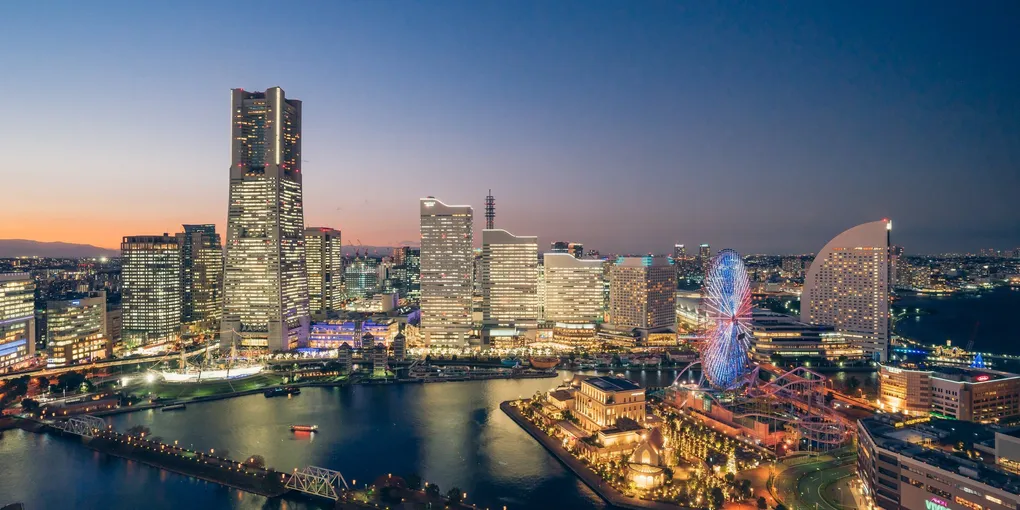
Minato Mirai is Yokohama’s modern waterfront: wide promenades, the giant Cosmo Clock 21 Ferris wheel and harbor views. Nearby, the Red Brick Warehouse, a pair of early-1900s customs buildings, is now full of shops, cafes and seasonal events. Families love the Cup Noodles Museum, where you can design your own cup of instant noodles.
Yamashita Park
A short walk away, Yamashita Park runs along the harbor and is one of the city’s favorite places for a stroll, especially at sunset.
Chinatown
Yokohama Chinatown grew from the Chinese merchants who arrived when the port opened, and today it’s the largest Chinatown in Japan. Come hungry: steamed pork buns, dumplings and sesame balls are sold from street windows, and hundreds of restaurants fill the side streets. The nearest station is Motomachi-Chukagai on the Minatomirai Line.
Local flavors
Look out for Iekei ramen, a rich pork-and-soy style that began in Yokohama, and the city’s many cafes and bakeries.
Getting there
From Tokyo, take a JR line, the Tokyu Toyoko Line from Shibuya (which runs straight onto the Minatomirai Line), or Keikyu from Shinagawa.